

I’ve been reflecting recently on how much determination, grit and perseverance my recovery from chronic illness has required. I don’t often share this. Most of my posts focus on the positive and the progress I have made. I am always making an intentional effort not to get stuck ruminating on hardships or fall into the ever-enchanting victim mindset. However, I believe acknowledging the difficulty and truth of the situation is a way of extending grace and compassion to myself.
Chronic illness recovery can sometimes look like a bright, smooth transition. That once you heal everything is sunshine and rainbows. Almost like pharmaceutical ads, Labrador puppies running in the sun, a perfect rainbow in the foreground holding up a drug saying, “I don’t shit myself anymore”. Actually, looking at my Instagram I fear that’s how it looks. Idyllic scenery, beautiful travels and my happy smile. And while the highs that I share are amazing and beautiful and the highest of highs, that isn’t the reality of recovery. I still shit myself on occasion (metaphorically anyway).
Recovering from a decade of chronic illness has been by far the hardest thing I have ever been through in my life. Using brain retraining and mind-body work to heal has been a continual exercise in resilience, mental strength and fortitude. Surviving years of debilitating chronic symptoms was an unimaginable horror. I spent years in pain, constantly looking for answers, trying new things and being let down time after time. Yet then I’d come back and try something new. Years of treatments that made me sicker as I was told, “You’ll feel worse before you feel better”. I was relentless in my pursuit to feel good. Looking back I honestly have no idea how I got through it. There are many reasons I shy away from sharing the negative sides of the experience. It’s not fun to relive the struggle and there are parts of me that want to run away from that part of my life and never look at it again.
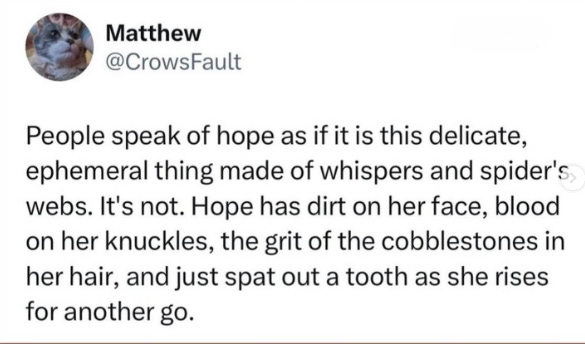
Whilst chronically ill, this quote is exactly what hope was to me: constantly googling for help, trying to comprehend what I was reading through the haze of my intense neurological symptoms. Doing coffee enemas daily for a year, not eating sugar for two years, fasting and crying on the lounge with nausea, being wheeled through an airport to try experimental overseas treatment, spending weeks after recovering in bed, unable to eat for days. Years of feeling numb, lost and confused as I sat watching life from the sidelines, dissociated with a brain that felt like it was on fire. Injecting myself with antibiotics, learning to give myself IVs, vomiting up supplements, weeks isolated without seeing friends, hours in the bath because it was the only way to reduce my pain, listening to yet another doctor tell me it was all in my head, trying another medication that didn’t work, wondering if I was depressed, wondering if a rational person would have given up already, wondering why I hadn’t given up already. Overdoing a treatment (again!) and spending the week back in bed in crippling pain, weeks on end alone, crying, hating everyone who tried to help me, isolating myself from everyone, hating the world and everyone in it. Then getting up the next day and starting again, googling “recovery stories”, not letting that inner light dim in my pursuit of health. Two steps forward, ten steps back, slowly making progress.
Then I discovered brain retraining. Brain retraining requires rewiring our brain’s negativity bias and healing requires staying in an elevated emotional state and breaking away from the habit of continually focusing on illness. I had to completely change my entire way of thinking and my approach to recovery. I have previously written about how this felt like I was gaslighting myself. While moving away from victim consciousness is essential, I am also learning that it is equally important to validate the hardships and give myself love and compassion. By validating how bloody hard it is, this signals safety to the nervous system, reduces internal resistance and allows the brain to move more easily into the elevated emotional states essential for healing.
When I first started brain retraining, I bought the Gupta Program and I dabbled in it for months. It didn’t matter what I did I could never get myself to stick to a daily practice. I’d reach four or five days of consistency, then fall out of it. Back then, I would hate myself because of it, I’d call myself lazy and feel shame and disappointment. But it didn’t matter what horrible names I called myself, I still couldn’t stick to the program. I have since learnt that my brain was stuck in a freeze state, of course it didn’t have any motivation. I send love and compassion to that version of myself now, she was doing the best she could with the capacity she had at that time.
Months later, after a concussion and a re-emergence of old symptoms alongside crippling anxiety, I hit rock bottom (again!). It was at this time I started DNRS and managed to create a consistent routine. The DNRS program recommends dedicating an hour to nervous system training per day, by completing ‘rounds’ (a routine involving visualisations). This was hard and I needed a lot of tricks to keep myself motivated. Once I learnt that my brain was wired to resist change, I tried to turn it into a game. My pre-frontal cortex was going to win, not my limbic system that was stuck in a survival response and feared change.
Sometimes it was 11.30pm and I was sneaking in a DNRS round instead of sleeping because I knew I couldn’t break my streak of rounds or I’d stop altogether. I’d spend hours some days, just sitting on my bed procrastinating doing them, staring out into space. I had to WILL myself into them. I’d spend the whole day at home and somehow find myself again at 11pm fitting in my rounds. The willpower and commitment it required to fight against my brain which wanted to stay frozen and stuck was extremely difficult. In amongst all this I had symptoms shouting at me, willing me to stop, telling me to forget about this silly visualisation practice. There was a part of me that wanted to lie in bed and wallow in self-pity. I did do this some days and I still do have days like this. Alongside this, my head fog and malaise added an extra element of difficulty.
Someone once described chronic fatigue as living life swimming against a current. I have never found a more apt metaphor to describe the struggle of chronic illness, even seemingly simple things require a lot more effort and dedication. “It’s just a simple exercise Alex, just sit and do a visualisation”, I’d tell myself, guilting myself about not being consistent enough. But it wasn’t that simple, it felt like moving mountains. Swimming against a current day in and day out is draining and I was already tired!
With time, the benefits of nervous system regulation became obvious, I could see that this was the missing piece in the puzzle that was my health journey. I experienced a more linear progress compared to the previous eight years. In saying that, it was far from straightforward. I had weeks or even months where I’d regress. But I had tools now to help me through it, and each setback I came out stronger. As my brain healed, the practice became easier.
I love this video from Dan Buglio. He talks about how you have to find an inner strength, something within you that can quieten those voices in your head that are telling you not to change, not to do your practice and to stay put. Somehow, I was able to find that, and I am grateful to the past version of myself who discovered it. But my goodness it was hard.
It’s been over two years now of fairly consistent practice. Of course I have had patches where it falls to the wayside, I’m in a big one right now, in some ways motivation is harder the busier and healthier I get. But then I accept these patches, don’t judge myself and pick myself up and choose to commit all over again. The self-motivation required is unlike anything else. As I’ve been saying, hardest thing I’ve ever done in my life!
But there are more layers of difficulty. It’s strange even now being seen as a success story. Sometimes I wince when people celebrate me as though I’m finished because I know I still have more work to do. I used to see recovery posts and subconsciously think if I can walk again and travel again my whole life will be fine. But physical recovery is different from re-entering the world. After ten years of not fully participating there’s growth and lessons in the come back and it’s a different part of my healing. (Not to mention the guilt of finding things hard when part of me thinks I should just be grateful to be healthy). Someone asked me recently, “When did you start feeling well?” but there’s no black and white answer. I thought there would be a finish line, a moment it was all over, but there isn’t. There’s beauty in embracing that and learning to love exactly where I am, but in the background of the wins of being out in the world some days I’m still like a duck, kicking my legs frantically underwater.
Imagine finding work for the first time in ten years, even without chronic illness symptoms. Imagine figuring out what to do with yourself and realising the things you thought you wanted aren’t what you want at all. Still feeling 23 in some ways, but then much older in others, yet trying to learn how to be 33. Realising how radically different you are from the person who entered the storm and figuring out who you are going to be when you walk out of it. Then starting from scratch and creating her from the ground up. On top of this, I have a rewired brain now, I am a different person with new and different values. That is a whole other level of hard. When you question your very values and existence and dig into reprogramming your subconscious thought patterns, and the person you spent your whole life believing you were drops out from beneath you, it takes a while to find your grounding again. Who the F am I? What do I even want? Questions I am still figuring out the answer to, although I am also learning maybe they don’t need an answer.
For me, this self-discovery process has meant ups and downs, patches of grief where I do not want to leave my bedroom, leaning heavily on hugs from my dog, and sometimes going too far and making silly choices. There are times when I want to move back to my parents’ house and never leave again, living like I did for years when sick. Like Bambi learning to walk again. Maybe in some ways these are not even chronic illness–specific challenges but just life, always with the easing yet constant presence of symptoms in the background. I know it is also a gift to have this blank canvas to build a beautiful life, and I have an acute awareness of the privilege and beauty of being alive. The first time post-illness I experienced an interpersonal issue with somebody, I revelled in the fact that it meant I had a social life again. I am all too aware that without the rain there’s no rainbow or flowers or flowing waterfalls or so many beautiful things, all of my clouds have silver linings these days, but that does not mean it is easy.
Another facet of recovery is that the more I heal, the more capacity I have to process trauma from my health journey. Last year I spent a lot of time travelling and free, but in between those wins and moments out in the world, I spent a lot of time processing intense grief and trauma from the years prior. Feelings and emotions I was unable to express when I was in the midst of it because I was in a freeze and survival state and my nervous system did not have the capacity. I spent weeks last year unable to get off my bedroom floor, hours of work with my beautiful holistic therapist learning how to let myself feel and release years of grief and suffering. Learning how to face it all and not run away from it.
But the rewards exceed all the hard work. It’s paid off and then some, incredibly rewarding yadda yadda. You know all of that because I always talk about the wins and the positivity, my Instagram is an ad for it. How I am becoming more grounded, closer to my true self etc etc. In Big Magic Elizabeth Gilbert talks about how most people miss out on the rewards because they quit when it gets hard (she also has a great piece here which is very on theme). I FEEL this with brain retraining and the inner work – it’s hard to truly face yourself, your biases, your contradictions, the truth that your thought patterns are keeping you sick, facing deep fears and insecurities instead of running away from them. This comes with ups and downs, but every time I have a low patch I know I just have to accept, surrender and trust that there is going to be more beauty on the other side. I love who I am now because of all the work I have done rewiring and healing from the inside out.
I read the book Sorrow & Bliss during recovery and this quote stood out: “Things do happen. Terrible things. The only thing any of us get to do is decide whether they happen to us or if, at least in part, they happen for us… And I wonder, is there any way you could come to see that what you’ve been through is for something? Is it why you feel everything and love harder and fight more ferociously than anyone else? Is it why you are the love of your sister’s life?… Why is that, if not for the life you have lived, as someone who has been refined by fire?”
I write this from a place of empowerment, not pity or victimhood. I know the difficulties and hardships have shaped me and I feel genuine and immense gratitude for it all. I’m also grateful I’ve had relative privilege and strong support throughout my recovery. Still, it matters to share honestly about the ups and downs. Not to revel in it or stay stuck, but like soldiers coming out of the storm we can trade battle scars and recognise the depth of understanding we share about the capacity and resilience of the human spirit. I have a few friends like this and there’s a way we see each other that others can’t, a natural depth to our friendship. Even with strangers, I can be brought to tears of pride and awe when they tell me their story.
Yes, the reality is recovery is hard. Harder than I can put into words. Yet, the deeper the struggle, the deeper the learning and self-growth. I have a big scar on my chest from my portacath and for a long time, I felt embarrassed by it. But like the mental scars, I now see it as a symbol of my fierceness and grit, like the Japanese art of repairing cracks with gold. This was me with dirt on my face, blood on my knuckles, spitting out a tooth as I rose for another go. This was me becoming refined by fire. And I couldn’t be prouder of that.
This post originally appeared on my Substack that you can view here.
Note: My blog may contain some affiliate links. I will be paid a commission if you use this link to make a purchase at no extra cost to you. I only link to products or programs I have personally used.
 ALEX MEEKA WELLNESS
Leave a comment