
When I started brain retraining using DNRS for my Chronic Fatigue Syndrome and Chronic Lyme Disease I was introduced to the idea that my post exertional malaise and intolerance to exercise was actually just my brain seeing movement as a threat – this was a radical idea to me at the time. I understood and bought into the science behind how mould and chemical sensitivities can be caused by a cross-wire in the brain however, the idea that my brain could be sensitive to movement took a longer time for me to buy into.
Using mould as an example, a person can have an initial exposure to toxic levels of mould, this causes the brain to label mould as a threat. When the nervous system is dysregulated this can also cause the brain to be overly sensitised and worsen this cross-wire in the brain. Often there’s a lot of stress with the initial mould exposure, with a lot of thoughts that reinforce the idea that mould is a danger. When an event occurs and it’s accompanied by intense emotions, this causes the brain’s association to a threat to become even stronger. It can then become a self-fulfilling cycle where more mould exposure leads to more looping and fearful thoughts which causes the brain to become even more sensitive to mould. The brain sends physical symptoms to alert you that there is mould around, it wants to keep you SAFE! It sends the same symptoms that you got during your initial exposure. I’ve met many people who would get physical symptoms before being consciously aware of mould in the environment, the brain is a powerful machine, and when the programming goes wrong, the symptoms and suffering can be immense. The subconscious brain learns to see mould as a threat because it’s been taught that by conscious thoughts and fear around mould. The brain can be retrained to remove these sensitivities and symptoms. I’ve met many people who have had improvements in their mould and chemical sensitivities in a few days, just by breaking this fear-thought cycle (yes I thought this was unbelievable at first too!).
Now that all makes sense, but what if it is exercise that the brain is sensitive to? When I first became unwell I was extremely go-go with a type A, perfectionistic personality, and then I was struck by a virus (possibly EBV) that caused me to be bedbound for 8 weeks. At the time I also had a lot of emotional stress accompanying this because the virus meant I was unable to start a finance internship that to 22 year old me was the absolute be all and end all (oh, the beauty of hindsight). Did my brain then become cross wired during the virus to label movement and energy expenditure as a threat? Did my emotional stress around this time reinforce this cross wire in my brain? When I tried to get back into the world post virus was my brain just sending the same symptoms as I had during the virus to keep me ‘safe’? Did my type A personality mean I already had a somewhat dysregulated nervous system, thereby allowing my brain to be even more sensitive and susceptible to this cross-wiring?
I know, I know, it’s a bit of a radical sounding idea upon first hearing it. When I started DNRS I thought no, that’s not true, I still have chronic infections and Lyme Disease and that’s why I’m so fatigued. But I could see I had other symptoms of nervous system dysregulation so I gave DNRS a go. With time I’ve really started to understand and see how the brain can see movement as a threat.
In this clip recently that I saw of pain doctor Dan Buglio, he talks about how post-exertional malaise is a sign that it’s the brain sending symptoms. He says an oversized delayed reaction is a sign the brain is involved because with normal fatigue and injury, you don’t have a much bigger flare up for days after. This is very clear and obvious to me now, but previously I believed this was all part of Chronic Fatigue and a normal physical response. The more I learn about the nervous system, the more the seemingly random reactions and unpredictability of Chronic Fatigue make sense. How come sometimes something would cause me to flare and at other times it wouldn’t?
I experienced the power of the brain in action a few times in recent months. I’d find myself in a “flare” or “ebb” with lower energy, and spend a few days reducing the activity in my schedule. Eventually I would decide to push myself a little and go to a Pilates class. Whenever I go to Pilates my mood is automatically elevated, I love the studio I go to and the vibe of the classes always makes me happy. This mood elevation crossed with the Pilates and going in with positive thoughts must retrain the brain to remember that movement is safe. Twice I’ve gone to classes feeling flat after a week or so of being in an ebb, and I’ve come out of it feeling energised and active, my brain clear and the “ebb” over. It’s almost as though I’m still in a state where my brain needs reminding to stay on the “movement is safe” neural pathways that I’ve been building with brain retraining, instead of the “movement isn’t safe” pathways that were the norm for me for years.
This idea of the brain being stuck in a “movement isn’t safe” pathway was also referred to in this article I found on Substack recently. It’s an interesting read as the author healed himself of Long Covid without the formality of brain retraining programs but a very similar philosophy.
I have also experienced this whilst traveling recently. I’ve had days where I feel my brain reverting to the “movement isn’t safe” pathways where I will feel old symptoms arising, especially fatigue. Some days I have had no choice but to push through due to travel plans. When this happens I’ve noticed my brain comes back into the “movement is safe” pathways and symptoms dissipate. I always make sure to watch my thought patterns in these moments when my brain reverts back, and use it as an opportunity to teach the body safety with positive affirmations, thoughts, somatic practices and breathwork. It’s also made me realise the times at home where perhaps I’m giving those symptoms too much power and need to learn to push through a bit more and get back onto the “movement is safe” brain pathways.
I have no idea if I’m writing this post in a way that makes sense. If somebody tried to explain this to me in the midst of my Chronic Fatigue I know I would reject the idea but now that I have a felt experience of this, I know it to be true. Also, this isn’t the same as Graded Exercise Therapy because it’s using neuroplasticity principles to change brain networks in order to tolerate exercise, not just pushing through and hoping to feel better. I’m also not saying that it’s “all in my head” and that my symptoms aren’t real. They are real, physical symptoms and to be honest they’re painful and they suck!! However, the more I’m learning, living and healing my nervous system, the more I am able to see that my brain is at the root cause of it all. All of my nervous system regulation work has supported my brain in being able to feel safe with movement and exercise again. It’s also something that has taken time and that I’m continuing to develop. I know soon I’ll be at the place where my brain forgets about the “movement isn’t safe” pathway and physical activity and lots of movement daily is the norm.
I feel excited now, as when I’m completing movement instead of thoughts such as “I need to be careful I don’t overdo it and give myself symptoms” I have thoughts such as, “it’s such a privilege building strength and power in my body”. I know my body is strong and capable and that my brain just needs to be reminded of it, and my nervous system needs some extra support as I continue healing and rewiring these brain pathways.
To finish the post I thought I’d add a few examples of movement-related activities I’ve achieved traveling in recent months incase it helps motivate anyone reading. I will also add that I used to be bed and housebound, with fatigue one of my main symptoms for almost 8 years with varying levels of disability in that time. At my worst I would move from my bed to the lounge and that was the most movement I would achieve in a day. I remember when walking into my backyard was an achievement. I had to use a wheelchair at times in the past as well. I started to develop some exercise tolerance with Lyme Disease treatment but I’d feel a heaviness and malaise on longer walks and needed recovery time. I also had a phase where it would be one activity every few days or once a week and I had to be extremely strict on what I could do. I also had years where some days I could do things and other days I’d have to be in bed, with no idea how to predict how I’d wake up each day:
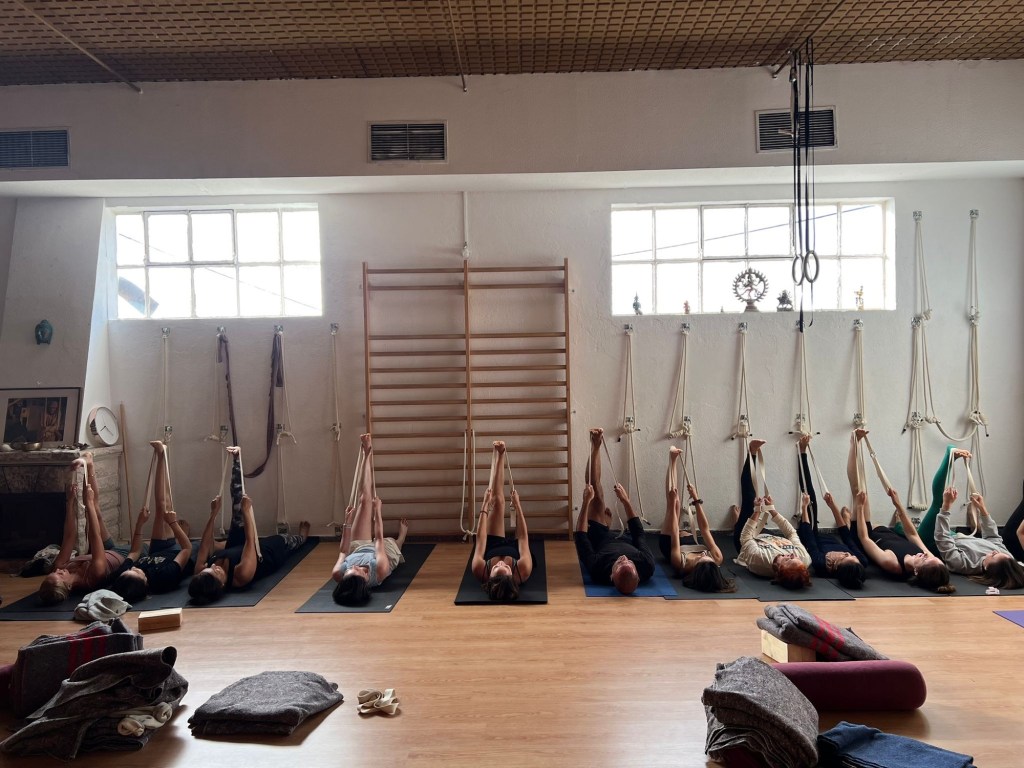
- I recently spent a week at a yoga camp where we did twice daily yoga for 1.5-2 hours per class (pictured above). I also practiced some inversions (headstands and handstands) which was very exciting as at one point my doctor diagnosed me with mild POTS.
- I did three surf classes during the same week between the yoga classes! This was cardio intensive and a big milestone for me. Plus socialising, beach visits and other fun activities with people from the yoga camp as well.
- I don’t require naps most days when traveling. I used to nap daily for years and years!
- I have completed a few 4-5 hour hikes, and also backed this up with activity intensive days on the day after these hikes. Previously I would do some hikes and my body would feel immense fatigue in the days after. My brain is learning it’s safe to have consecutive days of physical activity.
- I get normal muscle soreness after some activities that dissipates after a day or two, without heavy lethargy and fatigue as well. A normal body rebuilding fitness and getting stronger.
Note: My blog may contain some affiliate links. I will be paid a commission if you use this link to make a purchase at no extra cost to you. I only link to products or programs I have personally used

 ALEX MEEKA WELLNESS
Leave a reply to How I Approach Exercise Using Brain Retraining Principles, Practical Tips – ALEX MEEKA WELLNESS Cancel reply